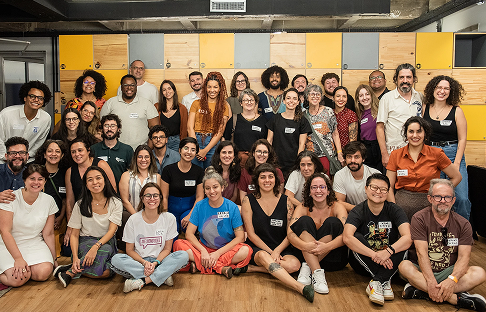
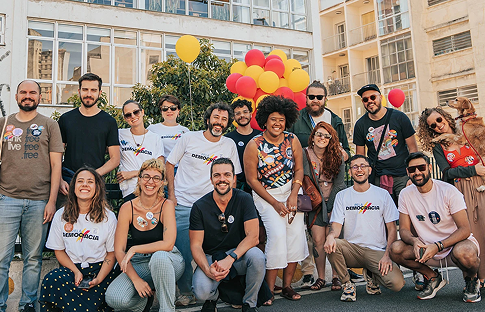
The Pact for Democracy Network brings together more than 220 Brazilian civil society organizations committed to defending and strengthening democracy. These organizations represent a wide range of causes, regions, institutional profiles, and political perspectives, working on issues such as human rights, climate, public integrity, countering disinformation, racial justice, civic participation, education, communications, transparency, institutional strengthening, and digital rights. This diversity is one of the Network’s greatest strengths.
What brings these organizations together is the understanding that democracy is not merely an institutional backdrop for social struggles; it is a concrete condition that enables rights to exist, public debate to take place legitimately, and civil society to fully exercise its capacity for action and advocacy. The Pact serves as a permanent space for coordination, collective action, and collaboration among organizations that view democracy both as a value in itself and as an indispensable tool for addressing the country’s challenges. By connecting organizations, promoting knowledge exchange, building shared agendas, and strengthening collective responses to democratic threats, the Network seeks to enhance the capacity of Brazilian civil society to act in a coordinated, pluralistic, and strategic manner.
What brings these organizations together is the understanding that democracy is not merely an institutional backdrop for social struggles; it is a concrete condition that enables rights to exist, public debate to take place legitimately, and civil society to fully exercise its capacity for action and advocacy. The Pact serves as a permanent space for coordination, collective action, and collaboration among organizations that view democracy both as a value in itself and as an indispensable tool for addressing the country’s challenges. By connecting organizations, promoting knowledge exchange, building shared agendas, and strengthening collective responses to democratic threats, the Network seeks to enhance the capacity of Brazilian civil society to act in a coordinated, pluralistic, and strategic manner.
Why Join the Network?
Access to a National Ecosystem of Democratic Organizations
Being part of the Pact for Democracy Network means joining a national space for exchange, collaboration, and collective action among civil society organizations from different fields, regions, and perspectives. The Network brings initiatives together, facilitates the exchange of experiences, encourages collaboration, and strengthens ties among actors committed to democracy and fundamental rights.
The work of defending democracy is today's greatest challenge, and it must be a collective effort. We need an ecosystem of organizations willing to contribute their most effective tools—such as mobilization, national and international advocacy, legal strategies, knowledge production, and communications—to defend the Democratic Rule of Law.
Camila Asano.
Executive Director, Conectas Human Rights
Engagement in High-Impact Collective Action
Network organizations take part in the development of campaigns, public statements, mobilization efforts, institutional advocacy, and collective responses to democratic challenges. The Network serves as a space for coordination and collaboration, expanding civil society's ability to act in a connected, strategic, and impactful way.
One of the Pact's greatest strengths is bringing together civil society organizations from different fields around a shared objective: defending and strengthening Brazilian democracy. It is an essential initiative that facilitates organizations' engagement in crucial actions for the proper functioning of Brazilian institutions, such as protecting the integrity of the Judiciary and strengthening electoral rules that make political parties more democratic.
Juliana Sakai
Executive Director, Transparency Brazil
Training, Tools, and Resources to Strengthen Your Organization
The Network promotes meetings, training programs, resource materials, methodological exchanges, and the circulation of relevant content to strengthen member organizations' work on issues related to democracy, civic participation, advocacy, information integrity, institutional strengthening, and the political landscape.
The Pact for Democracy Network is an incredibly powerful space for fostering exchanges among diverse organizations. Through training, tools, and shared content, the Network strengthens Brazilian civil society by deepening knowledge and expanding organizations' capacity for action.
Roberto Andrés.
Co-Executive Director, BONDE
Visibility and Strategic Engagement Opportunities
Organizations within the Network become part of debates, convenings, initiatives, and collaborative spaces promoted by the Pact and partner organizations, expanding opportunities for dialogue, collaboration, and institutional visibility on strategic issues for Brazilian democracy.
The collective, coordinated, and synchronized work carried out by organizations within the Pact in defense of elections highlights both the many challenges we face and the complexity of our work. That is why diversity is so important—we need many voices working together so that our efforts can advance democracy.
Gabi Juns
Co-Director, Instituto Lamparina
Support and Facilitation for Strategic Connections
The Pact connects organizations, agendas, and opportunities for collaboration. The Network facilitates relationships among civil society actors, researchers, communicators, grassroots initiatives, and institutional partners, strengthening synergies and expanding opportunities for joint action.
Over its eight years of existence—marked by some of the most significant authoritarian threats since the end of Brazil's military dictatorship—the Pact for Democracy has demonstrated its ability to coordinate and drive important initiatives in defense of Brazilian democracy.
Sergio Fausto
Executive Director, Fernando Henrique Cardoso Foundation
Membership in a Legitimate and Internationally Recognized Coalition
By joining the Pact for Democracy Network, your organization becomes part of a coalition internationally recognized for its ability to coordinate, mobilize, and defend democracy. In 2025, the Pact received the Skoll Award for Social Innovation, one of the world's leading social innovation awards, and won the World Justice Challenge, presented by the World Justice Project, for its work promoting democratic and electoral integrity in Brazil. In addition to its work in Brazil, the Pact also participates in international initiatives and partnerships dedicated to strengthening pro-democracy movements, fostering cooperation among civil society organizations, and developing global responses to the rise of authoritarianism and democratic erosion.
We have experienced both progress and setbacks in confronting the international network of authoritarian actors. On the one hand, the democratic community has made significant progress in building its own international network, with an increasing number of spaces and processes dedicated to exchanging lessons learned and coordinating efforts. The democratic movement is better prepared and better connected than it was a few years ago, but we are still far from a comfortable position. We have made meaningful progress, but much more remains to be done.
Pedro Telles
Program Director, Democracy Hub (D-HUB)
What the Pact Does in Practice
The Pact for Democracy works to strengthen Brazilian democracy by bringing together civil society organizations, social movements, institutes, foundations, and initiatives committed to defending rights, promoting civic participation, and strengthening democratic institutions. In practice, the Pact connects organizations from different sectors and regions to develop collective responses to democratic challenges. This includes promoting communication campaigns, producing and disseminating reliable information, conducting research and assessments, engaging in advocacy with public institutions, and strengthening civic participation on issues of public interest.
The Network also develops initiatives aimed at countering disinformation, promoting electoral integrity, strengthening democratic culture, and expanding the participation of historically underrepresented groups in decision-making spaces. In addition, it creates opportunities for dialogue and collaboration among organizations, experts, leaders, and citizens committed to building a more just, pluralistic, and democratic society.
Through thematic agendas, nationwide campaigns, training programs, mobilization efforts, and strategic partnerships, the Pact transforms knowledge into collective action. Our work seeks to strengthen public trust in institutions, expand civic participation in democratic processes, and help ensure that democracy is increasingly capable of responding to society’s needs.
The Pact is a permanent space for cooperation that brings together diverse voices around a common goal: to defend and deepen democracy as the pathway to guaranteeing rights and building a more inclusive and democratic country.
How We Work and Engage
The Pact for Democracy Network operates through continuous and collaborative engagement, creating spaces for exchange, coordination, and collective action among organizations committed to defending democracy. Organizations can engage with the Network in different ways, according to their interests, capacities, and specific contexts.
Plenary Meetings and Collective Spaces
The monthly plenary meetings are the primary gateway to the Network. During these meetings, member organizations share political and institutional analyses, discuss democratic challenges, develop collective strategies, and learn about projects, campaigns, and opportunities for joint action.
Ongoing Coordination and Participation
In addition to the plenary meetings, engagement takes place through working groups, thematic coalitions, campaigns, mobilization efforts, training programs, in-person meetings, and ongoing exchanges among member organizations. Network communications are coordinated by the Executive Secretariat, primarily through institutional email groups and WhatsApp channels.
Network Collaboration
Organizations can contribute by proposing initiatives, collaborating on campaigns, strengthening mobilization efforts, sharing analyses, or fostering strategic connections. Not every initiative involves the entire Network simultaneously: some engage dozens of organizations, while others are developed by smaller groups focused on specific issues or political contexts. The Pact’s role is to facilitate these connections and strengthen the collective capacity of Brazilian civil society to act.
How to Join
Criteria
Criterion 1
Be a civil society organization, collective, movement, network, or initiative with a publicly identifiable presence and a non-profit mission;
Criterion 2
Demonstrate an unequivocal commitment to Democracy and the Democratic Rule of Law;
Criterion 3
Operate independently from political parties, governments, companies, and religious institutions;
Criterion 4
Respect pluralism, constructive disagreement, and democratic coexistence;
Criterion 5
Refrain from promoting disinformation, hate speech, or anti-democratic practices;
Criterion 6
Demonstrate an established public track record aligned with the Network's values;
Criterion 7
Be willing to collaborate, participate, and contribute to the collective work of the Pact;
Criterion 8
Uphold the principles of ethics, mutual respect, and the rejection of discriminatory practices.
Process
Membership Application Form
Organizations are asked to provide information about their mission, activities, and the individual who will serve as their primary representative within the Pact for Democracy Network.
Executive Secretariat Review
The Executive Secretariat will review the information submitted by the organization within 15 days, based on the Pact's membership criteria and guiding principles. If necessary, additional information or clarification may be requested.
Notification of the Next Step
Following the review, the organization will receive an email informing it of the preliminary decision regarding its application.
If the application is approved, an onboarding meeting will be scheduled.
If the application is not approved, the organization may submit additional information and request a new review. Should the decision remain unchanged, a new application may be submitted after one year.
Onboarding Meeting
The onboarding meeting is an opportunity to welcome the organization, align expectations, and integrate it into the Pact Network. During this meeting, we present the Pact's work, operating model, and opportunities for participation, while also learning more about the organization's history, priorities, and areas of interest.
Formal Admission
Once the application has been approved, the organization will formally join the coalition by agreeing to the Network Participation Handbook, confirming its commitment to the Pact's principles, values, and standards of collaboration. The organization will then be integrated into the Network's communication channels, collective spaces, plenary meetings, initiatives, and collaborative activities.
Membership Application
The Pact for Democracy Network is made up of civil society organizations that believe democracy is the foundation for any lasting transformation and seek to join forces to defend, strengthen, and reinvent it every day.
We want to work alongside organizations that value dialogue, respectful disagreement, and coordinated action to protect what makes disagreement possible in the first place: the democratic rules of the game.
If your organization shares this spirit, we invite you to join our Network.
Nenhuma organização encontrada com os filtros selecionados.
Get weekly analyses about democracy in Brazil and around the world
Our weekly content curation: articles, reflections, interviews, and analyses on democracy and the work of civil society.
By signing up, you agree to receive the Pact for Democracy weekly newsletter at the email address provided. No emails other than the newsletter will be sent. You may unsubscribe at any time.